🌍 The First “Universal” Kidney Transplant in a Human
For the first time in history, scientists have converted the blood type of a donor kidney and successfully transplanted it into a human being. The procedure, performed in China and reported in Nature Biomedical Engineering by researchers from Canada and China, used enzymes to strip away the type-A blood antigens from a donor kidney — turning it into a type O organ, compatible with any recipient.
The recipient, a 68-year-old man who had been declared brain-dead, received the modified kidney. The organ functioned normally, producing urine for six days and showing no signs of immediate rejection for the first two days. Eventually, A-antigens began to reappear, and the immune system reacted — but the proof of concept was undeniable.
“This is a milestone,” said Stephen Withers, the University of British Columbia chemist who helped discover the enzyme. “We’ve shown it can work in a human body.” (Nature, Oct 2025
)
💔 The Problem It Could Solve
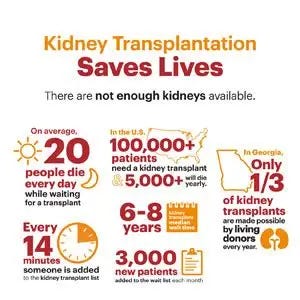
Today, more than 90,000 Americans are waiting for a kidney transplant. Nearly half have type O blood, which makes them the hardest to match — because type O patients can only receive kidneys from type O donors. Some wait years longer, others die waiting.
Each kidney is labeled, immunologically, by small sugar molecules — antigens — that define blood type. If a recipient’s antibodies see foreign antigens, they attack, triggering hyperacute rejection, often destroying the graft within minutes.
That’s why transplant surgeons have had to match donors and recipients so precisely for decades. And why this discovery — converting an A kidney to O — could change everything.
🔬 How the Scientists Did It
The research team used a perfusion technique: they pumped a gentle stream of specially engineered enzymes through a donor kidney outside the body. These enzymes acted like molecular scissors, snipping off the A antigens from the kidney’s blood vessels and capillaries.
Once “washed,” the kidney appeared to the immune system as type O — free of the molecular flags that usually cause rejection. It was then transplanted into a brain-dead volunteer in Chongqing, China.
For two days, the organ showed no hyperacute rejection — a result that would have been impossible with a regular A→O mismatch. Even more remarkably, the kidney began producing urine and stayed functional for nearly a week.
This achievement builds on a series of earlier breakthroughs:
In 2019, the same research group first identified the enzyme capable of removing A antigens.
In 2022, they demonstrated that a type-A lung could be converted into type O — though it was not transplanted into a person.
In 2025, they’ve taken the next historic step — proving it can work inside a human body.
🧠 Why It’s So Brilliant — and So Logical
Most transplant medicine today focuses on treating the recipient: suppressing their immune system, filtering antibodies, or desensitizing them before surgery. That takes weeks, which is impossible for deceased-donor organs that must be transplanted within hours.
This new approach flips the paradigm: Instead of changing the person, we change the organ.
As Dr. Natasha Rogers, transplant clinician at Westmead Hospital in Sydney, explains:
“Treating the donor organ instead of the recipient is a breakthrough. For deceased donors, you don’t have time to prepare the patient — but you can prepare the organ.”
If perfected, this could mean every deceased-donor kidney could be converted to a universal type O, ending years-long waits and saving tens of thousands of lives annually.
⚕️ For Medical Professionals — Mechanism and Future Challenges
Mechanism of conversion: The enzyme derived from Flavonifractor plautii removes the α-N-acetylgalactosamine (GalNAc) residues from A-antigen glycoproteins on endothelial cells during ex vivo perfusion.
Perfusion protocol: The kidney is circulated with enzyme-enriched perfusate under hypothermic or normothermic conditions, preserving endothelial integrity while allowing full antigen exposure.
Duration of effect: In the human model, antigen removal was initially complete, but A antigens re-expressed by day 3, indicating endogenous glycosyltransferase activity persists.
Functional results: No hyperacute antibody-mediated rejection was observed for 48 hours; mild AMR markers appeared later. The organ continued urine production for six days, suggesting partial accommodation.
Next hurdles:
Durability: prevent antigen re-synthesis (e.g., via CRISPR knockout or enzyme re-infusion).
Endothelial safety: ensure enzymatic treatment doesn’t trigger coagulation or inflammation.
Integration: combine with standard immunosuppression and complement inhibition.
Regulatory pathway: validate reproducibility and sterility before clinical rollout.
Potential extensions:
Heart, liver, and lung conversion.
Integration into organ-exchange networks.
Bioengineered “universal donor” organs using gene-edited pigs or lab-grown tissue.
🧬 The Bigger Picture — A Glimpse of Medicine’s Future
This breakthrough hints at a coming era of “molecular organ engineering” — where donated organs can be personalized at the molecular level before transplant.
We’re not far from a world where:
Xenotransplants (from pigs) are enzyme-treated and gene-edited to avoid rejection.
Ex vivo organ perfusion becomes a therapeutic platform, not just a preservation step.
And artificial enzymes or nanotech tools make any organ immunologically “invisible.”
In essence, we’re learning to speak the language of the immune system — editing the surface of life itself.
❤️ The Human Side
Behind every statistic is a person waiting — tethered to dialysis, losing energy, missing birthdays. Imagine telling them: “Your blood type no longer limits your chance to live.”
That’s the miracle inside this molecule.
🧭 Final Thoughts
For decades, transplantation has been a race between time and immunity. Now, thanks to one elegant enzyme and a bold team of scientists, we’re one step closer to universal compatibility — and perhaps, one day, to a world where no one dies waiting for an organ.
This isn’t just biochemistry. It’s humanity, rewritten at the cellular level
.
References:
Fieldhouse, R. (2025). First human transplant of kidney modified to have “universal” blood type.Nature Biomedical Engineering.Nature link
Livescience (2025). Scientists convert a kidney from blood type A to universal type O and implant it in a brain-dead recipient.
University of British Columbia (2025). Universal Organ Transplant Project.
Blessings.
Afshine Ash Emrani, M.D., F.A.C.C. Assistant Clinical Professor, UCLA David Geffen School of Medicine Castle-Connolly Nationwide Top Doctor (Since 2008) Los Angeles Magazine Super Doctor (Since 2010) LA Style Magazine Top 100 Doctors in America (2024)