

I often tell people that choosing optimism—believing a better future is possible—is a deliberate choice. Some get angry with me. They call it delusional. You don’t understand, they say. And I do understand the resistance. I understand it deeply. But let me share why this truth matters so much.
The story of Moses leading the Israelites out of Egypt is not merely ancient history. It is a psychological and spiritual map of the human condition—one we are still living inside.
For generations, the Israelites lived as slaves under Pharaoh. They knew the whips, the labor quotas, the predictable misery. And when Moses arrived with miracles and the promise of freedom, their response was not joy. It was not even relief. The moment difficulties arose in the desert, they complained bitterly: Why did you bring us out of Egypt? At least there we had food and a bed!
Think about that. They preferred the certainty of chains to the uncertainty of open sky.
We all have a Pharaoh inside us.
It is that voice—quiet, persistent, disguised as reason—that whispers: Stay here. Stay small. Yes, it hurts, but at least you know this pain. At least it’s familiar. Out there? Out there you might fail. Out there you might discover you’re not enough. Better the devil you know.
And so we stay. Not because we lack intelligence. Not because we can’t see the door. But because the Pharaoh Within has taught us to mistake our cage for a home.
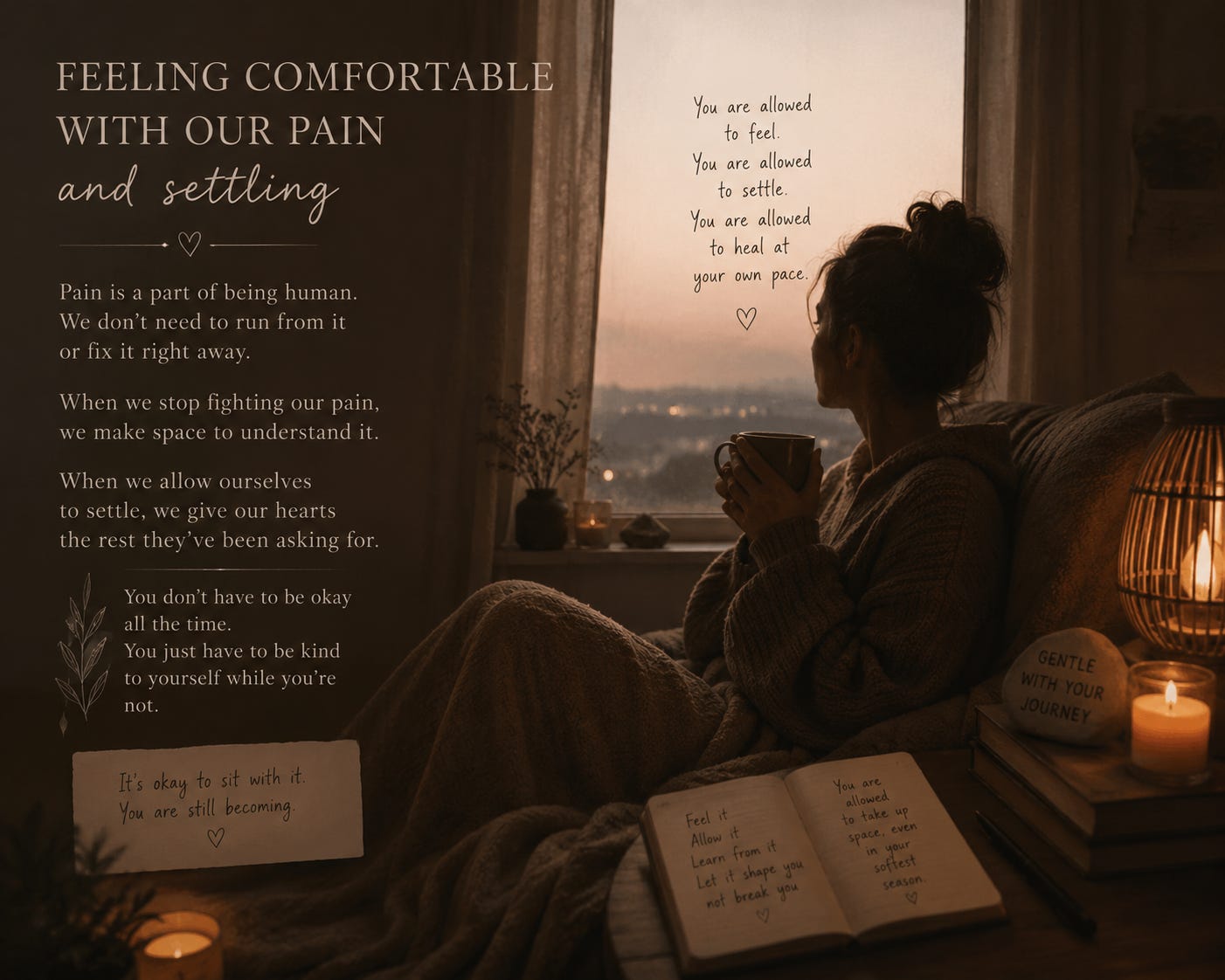
Here is what no one talks about: we don’t just tolerate our suffering. We grow comfortable in it. We wrap ourselves in it like an old blanket. The pain becomes familiar, and the familiar becomes safe, and before long we can’t tell the difference between safety and slavery.
It goes even deeper than comfort. Sometimes we wear our trauma like a badge of honor. We build an identity around our wounds. We tell our story of suffering and watch people’s faces soften with sympathy, and something in us feels seen. We learn that pain earns us attention, compassion, even a kind of status. Look what I survived. Look what was done to me. Look how much I carry. And when others feel bad for us, there is a warmth in that—a strange, addictive warmth that feels almost like love.
I say this without judgment, because I understand the pull. When you’ve been hurt badly enough, victimhood can feel like the only identity that makes sense. It explains your life. It excuses your paralysis. It gives you a story, and human beings need stories the way they need oxygen.
But here is the truth that the Pharaoh Within never wants you to hear:
That is no way to live.
A life built around your wounds is still a life controlled by whoever inflicted them. A life spent collecting sympathy is a life spent proving you are broken. And the warmth of other people’s pity—however real it feels in the moment—will never, ever be enough to replace the fire of actually living.
listen to my new book BEYOND THE WHITE COAT
The psychologist Martin Seligman spent decades studying what he called learned helplessness. His research showed something devastating: when people experience repeated, uncontrollable pain, they eventually stop trying to escape—even when the door finally opens. They internalize the belief that nothing they do will matter. Motivation collapses. Passivity becomes identity.
After generations under Pharaoh, the Israelites had been conditioned by brutality. Their helplessness showed up as constant complaining and a desperate pull back toward Egypt the moment the journey grew hard. Known misery felt safer than uncertain freedom. They had forgotten what it meant to want something better.
This same pattern plays out in countless lives today. People remain in toxic relationships, dead-end situations, and self-destructive cycles—not because they cannot see the exit, but because repeated experience has taught them that trying is pointless. The Pharaoh Within uses learned helplessness as one of its most powerful weapons: Why bother? You tried before and it didn’t work. At least here, you know the rules.
The philosopher Erich Fromm took this insight even deeper. In his remarkable 1941 book Escape from Freedom, Fromm observed something paradoxical: we have achieved unprecedented liberation from rigid structures and old authorities, but this freedom from comes at a steep psychological cost—isolation, anxiety, and a terrifying sense of being unmoored.
Fromm saw that freedom from is not the same as freedom to. Breaking old chains is not the same as building a new life of creative work, meaningful love, and authentic self-expression. Without the second kind of freedom, the first becomes unbearable. And so many people do something astonishing: they flee from freedom itself. They submit. They conform. They dissolve into the crowd. They choose the illusion of security over the terrifying, beautiful weight of their own life.
The Israelites in the desert are Fromm’s insight made flesh. They had been given physical freedom from Pharaoh. But they were not yet psychologically free. So they longed to go back.
As one person wisely observed: Some of the Hebrews who crossed the sea with Moses left the land of slavery, but slavery didn’t leave them.
The Pharaoh Within is the part of us that prefers the known cage to the open desert. It hardens our hearts against growth. It convinces us that victimhood is protection, that staying small is wisdom, that our wounds are our most interesting quality.
But the story of the Exodus reveals something greater. God did not merely want to free the body. He wanted to free the spirit—to create a people capable of receiving. The teachings, the miracles, the Promised Land itself could only be given to an open vessel. A heart still clinging to the comforts of slavery—still wearing its chains as jewelry—cannot hold what freedom offers.
Viktor Frankl, who survived the horrors of concentration camps, captured the essence of this truth: between what happens to us and how we respond, there is a space. In that space lives our freedom. Everything can be taken from a human being except one thing—the ability to choose our attitude in any given set of circumstances.
You are not your wounds. You are not your worst story. You are the one who gets to decide what happens next.
Name the voice. When you hear the whisper—Stay safe, go back, it’s too hard, at least here people feel sorry for you—call it exactly what it is: the Pharaoh Within. Awareness alone begins to weaken its grip. You cannot fight what you refuse to see.
Let go of the badge. This is the hardest one. Your pain is real. What happened to you matters. But you were not put on this earth to be a monument to your suffering. You can honor what you survived without letting it become the whole of who you are.
Understand the pattern. Recognize where learned helplessness has taken root. Where have you stopped trying because past efforts felt futile? Where have you mistaken resignation for wisdom? Where have you confused sympathy for connection?
Choose positive freedom. Move beyond “freedom from” your old limitations and into “freedom to” create meaning—through relationships, work you believe in, service to others, and the slow, sacred labor of becoming who you really are.
Take small courageous steps. Optimism is not a feeling. It is a practice. Each step into discomfort builds the muscle of hope. Each small win rewrites the story that nothing you do matters.
Cultivate an open vessel. Through prayer, reflection, gratitude, and the company of fellow travelers, keep your heart soft enough to receive what life is trying to give you.
The desert is uncomfortable. But it is also where miracles happen. It is where we shed the identities that were never truly ours—including the identity of the victim, which may be the hardest one to release, because it felt so true for so long.
You were not created for comfortable slavery—even the internal kind. You were not created to collect sympathy. You were not created to be admired for how beautifully you suffer.
You were created for the journey toward the Promised Land.
The choice is always yours: listen to the Pharaoh Within, or follow the call toward freedom.
What will you choose today?
read my new book: BEYOND THE WHITE COAT
Blessings.
Afshine Ash Emrani, M.D., F.A.C.C.
Assistant Clinical Professor, UCLA
David Geffen School of Medicine
Castle-Connolly Nationwide Top Doctor (Since 2008)
Los Angeles Magazine Super Doctor (Since 2010)
LA Style Magazine Top 100 Doctors in America (2024)
Subscribe to mynewsletter: substack.com/@afshineemrani
Explore my books: Amazon Author Profile